Mental Health First Aid in the Workplace: A Practical Guide for Employers and Employees

Mental health concerns can affect anyone at work, sometimes becoming visible through changes in communication, attendance, or concentration. A thoughtful response can help a colleague feel heard and find suitable support, while respecting their privacy and choice.
What is mental health first aid in the workplace?
Workplace mental health first aid is initial, practical support for someone who may be experiencing emotional distress or a mental health concern. It involves listening, offering information, and helping them connect with appropriate resources; it is not diagnosis, therapy, or treatment.
A workplace mental health first aider is usually an employee who has completed relevant training. They can notice signs that someone may be struggling, start a respectful conversation, and point the person toward support such as an Employee Assistance Program (EAP), a healthcare professional, or a manager responsible for wellbeing resources.
The role is similar to other forms of first aid in one important respect: it can provide a supportive first response while someone considers what to do next. But mental health concerns are not always visible, and a first aider cannot determine what condition someone has or guarantee a particular outcome. Training and responsibilities vary between organizations, so employees should check their workplace policies.
Why it matters in employment settings
Mental health first aid matters at work because early, respectful support can make it easier for a person to seek help and understand their options. It can also contribute to employee wellbeing and a workplace where people feel safer raising concerns.
Work pressures, personal circumstances, health issues, and difficult events can all affect how someone feels and functions. A colleague may seem withdrawn, unusually irritable, overwhelmed, or less engaged than usual. None of these signs proves a person has a mental health condition. They can, however, be a reason to check in with care rather than make assumptions.
Early intervention does not mean trying to solve the problem before it becomes serious. It means offering a calm opening for conversation and sharing available routes to support. That can help someone find out whether an EAP, a healthcare provider, or a practical adjustment at work could be useful.
A supportive response is only one part of a healthy employment environment. Workload, management practices, discrimination, and unclear expectations can affect psychological safety. Employers should address workplace conditions as well as offer individual support. First aid cannot make harmful working conditions acceptable or replace changes that may be needed.
The role and limits of a workplace mental health first aider
A workplace mental health first aider can listen, offer non-judgmental support, and help a colleague find suitable next steps. They are not a clinician and should work within their training, organizational procedures, and personal boundaries.
In practice, a first aider may:
- Notice a change in behavior or hear a colleague express distress.
- Ask an open, respectful question and listen without rushing to give advice.
- Share information about support options, such as an EAP or professional mental health support.
- Encourage a colleague to contact a qualified provider or appropriate workplace contact.
- Follow workplace procedures if they believe there is an immediate safety concern.
Active listening means giving the person time to speak, asking what would help, and reflecting back what you have heard. It does not mean probing for personal details, interpreting symptoms, or promising to keep every disclosure secret. A first aider should explain any limits to confidentiality before sharing sensitive information.
There are clear limits to the role. First aiders should not diagnose, provide counseling beyond their competence, manage a crisis alone, or take responsibility for another person’s treatment. Choosing to be available for a conversation does not make them accountable for a colleague’s decisions. Employers should give first aiders guidance and support so the role does not become an unrecognized substitute for professional care.
How to support a colleague who may be struggling
To support a colleague, choose a private and appropriate moment, describe what you have noticed without judgment, listen, and ask what kind of help they would welcome. Keep the conversation focused on care and options rather than a diagnosis.
A simple opening can reduce pressure: “I’ve noticed you seem quieter lately. How are you doing?” If the colleague does not want to talk, accept that answer. You can let them know you are available later or share where they can find support without insisting that they disclose anything.
During the conversation:
- Listen first. Give them time to explain in their own words. Avoid interrupting or comparing their experience with yours.
- Ask what would help. They may want someone to listen, help finding an EAP contact, or information about workplace options.
- Offer choices, not pressure. Explain possible routes to support and let them decide what feels manageable.
- Be clear about your role. You can help them find resources, but you are not a therapist or an emergency service.
- Follow up appropriately. A brief check-in can show care, provided it respects their boundaries and privacy.
Avoid saying that the person should simply stay positive, telling them what their condition is, or promising that everything will be fine. These responses may close the conversation, even when they are meant kindly. If work is part of the problem, do not assume the person must explain personal circumstances to request information about workplace support or adjustments.
Building a workplace support system
Employers build an effective workplace support system by combining trained contacts with clear policies, accessible professional resources, and practical referral pathways. Mental health first aid works best when employees know what help exists and how to reach it.
Useful steps for employers include:
- Set clear policies. Explain how employees can raise wellbeing concerns, request support, and find information about privacy and escalation.
- Train and support first aiders. Make their role, limits, and routes for consultation clear. Training should not leave first aiders responsible for clinical decisions.
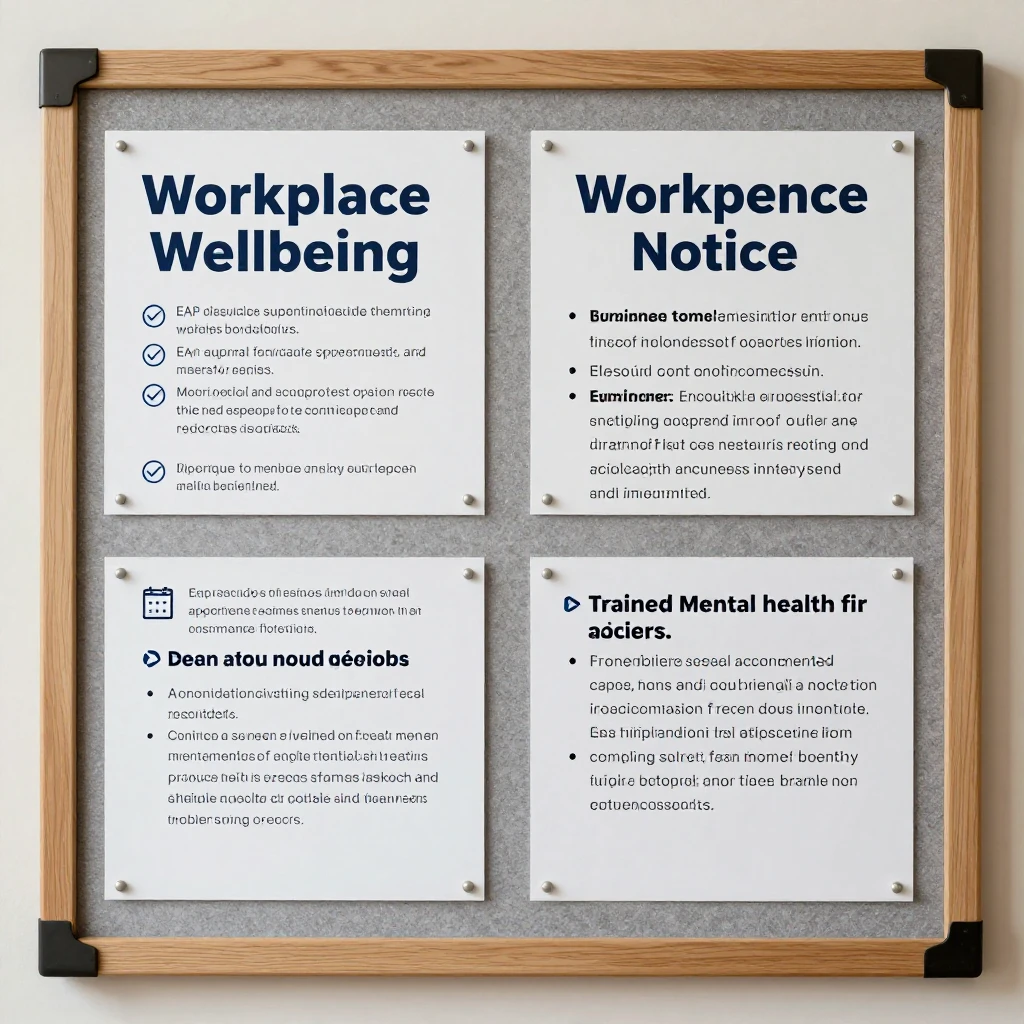
- Make the EAP easy to find. Explain how to contact the Employee Assistance Program, what services it offers, and what confidentiality information employees should review.
- Provide referral options. Identify routes to professional mental health support, occupational health where available, and urgent services when needed.
- Review working conditions. Assess factors such as workload, role clarity, and respectful treatment alongside individual wellbeing resources.
Employees should not have to disclose a diagnosis to learn what resources are available. Employers can explain options in advance through onboarding materials, staff portals, or manager check-ins. Because services and policies vary, organizations should keep contact details and procedures current and state clearly when a resource is not an emergency service.
Privacy, boundaries, and urgent concerns
Privacy means handling a colleague’s personal information respectfully and sharing it only through appropriate channels. If someone may be at immediate risk of harm, follow workplace emergency procedures and seek urgent professional help rather than trying to manage the situation alone.
Do not repeat a colleague’s disclosure to coworkers or discuss it casually with a manager. If you need guidance, use the designated confidential route in your workplace and share only the information needed to get that guidance. A first aider should not promise absolute secrecy: explain that information may need to be shared if there is a serious safety concern or a relevant workplace procedure applies.
If a colleague appears to be in immediate danger, contact local emergency services or an appropriate crisis service, following your organization’s procedures. Stay with the person if it is safe to do so, and involve a responsible person who can help. If the concern is serious but not immediately urgent, encourage contact with a qualified mental health professional, healthcare provider, or suitable workplace service.
When the situation is unclear, do not try to assess risk beyond your training. Ask the designated workplace contact or a professional service for guidance. Procedures and available support differ by location and employer, so employees should use current local information.
Frequently asked questions
Is workplace mental health first aid the same as therapy?
No. Workplace mental health first aid offers initial listening and signposting. Therapy is a professional service delivered by a qualified provider; a first aider does not diagnose or treat mental health conditions.
What should a mental health first aider do if a colleague declines help?
Respect the colleague’s choice unless there is an immediate safety concern requiring action under workplace procedures. You can leave the door open, share support information, and check in later without pressure.
How can an employee find confidential support at work?
Check the employee handbook, staff portal, or wellbeing policy for the EAP, trained first aiders, and other support contacts. Ask how confidentiality works before sharing personal information, since arrangements vary by service and employer.
When should a concern be escalated?
Escalate when someone may be in immediate danger, when workplace procedures require it, or when you need professional guidance beyond your role. Contact emergency services for an urgent safety threat, and do not attempt to handle a crisis alone.